A terraced garden is a strange kind of gift. You get a long, thin strip of outdoor space that is easy to look after and, usually, a decent amount of shelter from the wind. What you also get, more often than not, is an audience. The upstairs windows of the house behind look straight down into your patch, and the neighbours either side can see most of what happens on your patio without much effort at all. The trick is to add privacy without turning a small garden into a cupboard.
Screening works best in layers rather than as one solid wall. A trellis here, a tall pot there, a climber filling the gap between the two. Get that combination right and a narrow garden can feel enclosed while still feeling open to the sky.
Check what you are allowed to do first
Before you buy anything, sort out the practical side. As a general rule in England, a fence, wall or other boundary structure higher than two metres may need planning permission, and the limit is lower where the boundary meets a road or footpath. The rules are slightly different in Scotland, Wales and Northern Ireland, and conservation areas and listed buildings bring their own considerations. Your local council's planning department will tell you in a couple of minutes, so ask before you build up rather than after.
If you rent, get the landlord's permission in writing before fixing anything to a wall or fence. It is also worth checking whose boundary it actually is, since deeds and Land Registry records usually show this, and you will need the owner's agreement before attaching trellis or screens. A five-minute conversation with a neighbour before work starts is almost always cheaper than an argument afterwards.
Trellis is still the best-value privacy fix
Trellis does something a taller solid fence cannot: it adds height and still lets light through. Fixed along the top of an existing fence panel, a 30cm to 45cm run of trellis can take the screen above eye level without making the garden feel dark or boxed in. Choose a grid, fan or expanding willow design depending on whether you want a formal line or something softer.
How you fix it matters. Screw timber battens to the fence posts rather than the panels, then attach the trellis to the battens, leaving a small gap behind so air can move through and damp does not sit against the wood. Trellis screwed flat onto a panel with four screws will eventually work loose in a gale, especially once a climber has added weight to it.
Colour makes more difference than most people expect. A dark grey, black or deep green trellis recedes into the planting and makes the boundary feel further away, while bare orange timber draws the eye straight to the fence line.
Climbers that earn their place
A climber will screen more of a small garden than almost anything else, but only if you pick one that suits the light and the space. Two or three different plants, chosen so that something is looking good in every season, will beat a single vigorous grower that swallows the whole border.
Evergreen choices
- Star jasmine (Trachelospermum jasminoides) — dense, glossy and scented in summer. Wants sun and shelter, and takes a year or two to get going.
- Pyracantha — thorny, fast and almost impossible to see through. The berries feed birds through winter.
- Climbing hydrangea — self-clinging, happy in shade, and slow enough to stay manageable.
- Ivy — the quickest cover of the lot, but keep it off mortar and window frames and cut it back hard twice a year.
For fast summer cover
Honeysuckle, common jasmine and climbing roses will fill a trellis within a season or two, though they thin out in winter. Annual climbers such as sweet peas or morning glory are useful while a permanent plant establishes, and you can simply pull them out in autumn.
Whatever you plant, set it about 30cm to 45cm away from the fence or wall, water it properly for the first two summers, and tie the stems in as they grow. Never let a climber wander behind a fence panel — it will push the panel out from the inside.
Tall pots and planters for height that moves
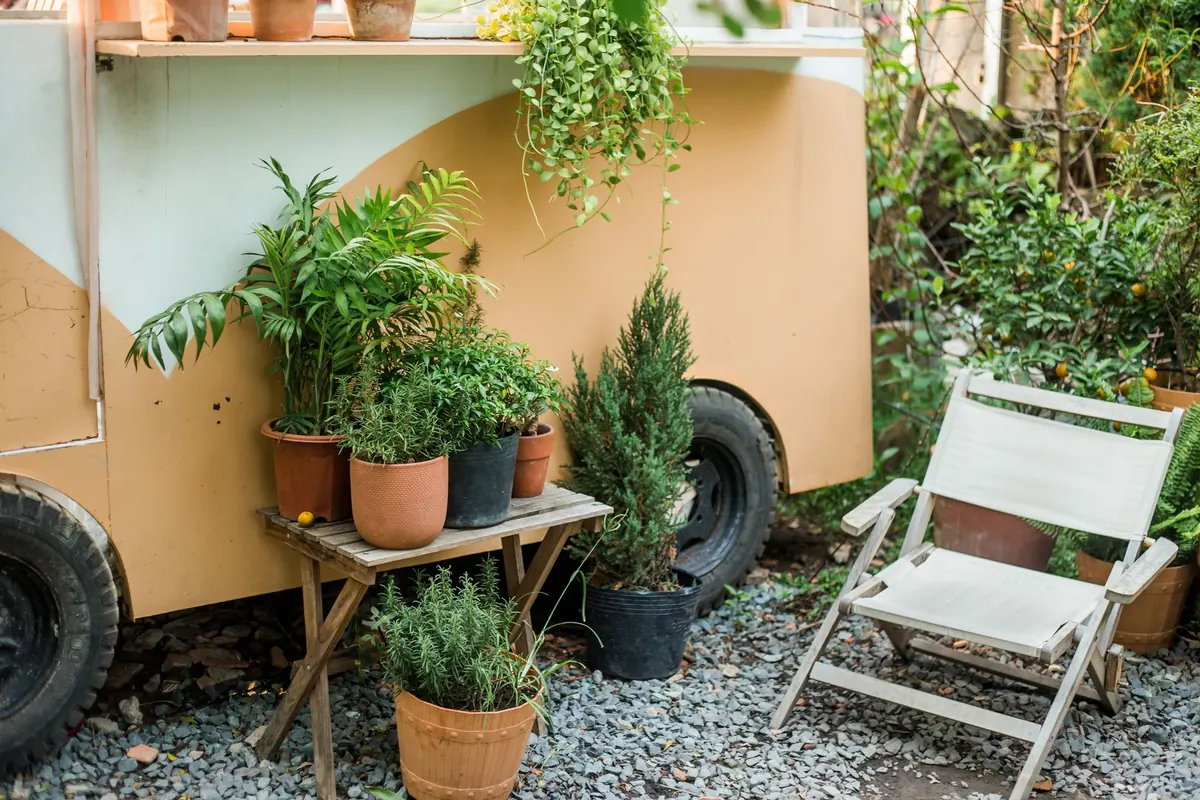
Pots are the answer when you cannot fix anything to a wall, or when you want screening you can reposition. A pair of tall containers at the far corners of a patio will break up the exact spot where next door's kitchen window looks in.
Clumping bamboos such as Fargesia types are the classic choice: upright, evergreen, and non-invasive if you avoid running varieties. Phormium, cordyline, bay, olive and standard privet or box all work in the right spot. For something more formal, a small pleached tree in a long trough makes a proper screen at head height.
Size matters more than style. Go for containers at least 45cm across and deep, fill them with soil-based compost mixed with grit, and stand them on pot feet or a caddy so you can move them for cleaning and repotting. Large pots full of wet compost are heavy, so think twice about standing several on timber decking, and expect to water far more often than you would a border.
Slatted screens, pergolas and shade sails
Where overlooking comes from upstairs windows, vertical screening will not solve it on its own. This is where something overhead helps: a pergola over the seating area, a shade sail, or a retractable awning. It hides the table and chairs from above while leaving the garden's length intact.
Slatted or louvred screens are a good compromise at the end of a plot. They break up sightlines without creating a solid wall, and they cast interesting shadows. If you use an outdoor mirror to bounce light around a shady corner, position it carefully — birds can fly into them — and avoid facing it towards a neighbour's window.
Six quick wins for an overlooked garden
- Run trellis along the top of the worst side fence and let one climber cover it rather than three competing.
- Stand two matching tall pots in the corners where you feel most exposed.
- Swap a solid end panel for a slatted one, so light still reaches the plants behind it.
- Turn the seating to face back down the garden; you notice the neighbours far less with your back to them.
- Add a pergola or sail above the table to block the upstairs view.
- Keep the last metre planted rather than paved, so there is something to look at that is not next door's extension.
Keeping the screen under control
A privacy screen is only pleasant if it stays tidy. Prune climbers after flowering where you can, and check the fixings on trellis and screens each spring after winter gales. Heavy pruning of hedges and trees is best avoided between March and August, when birds may be nesting — if you find an active nest, put the job off for a few weeks.
Water new climbers and potted plants through their first two summers, feed pots monthly from spring to midsummer, and take a few minutes in autumn to clear leaves from behind screens so damp does not build up. If a plant is determined to reach a neighbour's side, cut it back from their side too, and tell them you are doing it.
The aim is a garden that feels private rather than shut in. Leave gaps for light, keep some open sky above the seating area, and let the planting do most of the work. A narrow terraced plot with two or three well-chosen screens and a decent climber will feel far more generous than a fence at maximum height ever could.