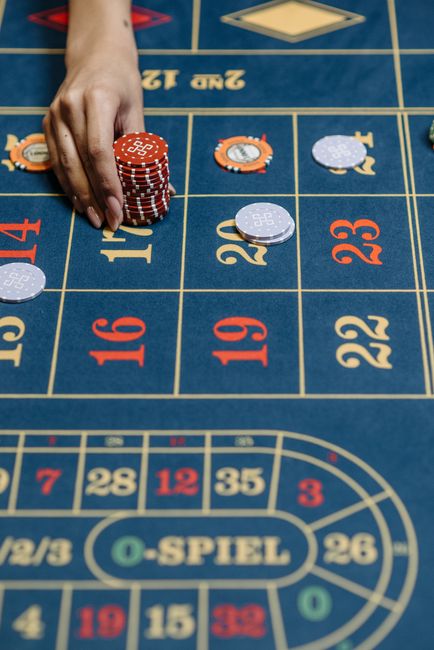
Ask ten seasoned gamblers why they win, and you'll get ten different answers. Ask the ones who actually survive decade after decade, and the answers start to converge. It rarely comes down to a secret system or a hot streak. It comes down to a handful of behaviours that most people ignore because they're boring, uncomfortable, or both.
I've spent years watching the iGaming space from the inside, and the gap between the people who treat it as a hobby and the people who treat it as a career is smaller than you'd think. Here's what actually separates them.
1. Bankroll Management Is Not Optional
Every casino in the world is built on a simple mathematical truth: the house has an edge and over enough spins, it collects. Your job as a player is to survive long enough for variance to work in your favour occasionally. That only happens if you protect your bankroll like it's the last money you'll ever have.
A few hard rules I've seen work:
- Never bet more than 1-2% of your total bankroll on a single hand, spin, or ticket. If you have $1,000 dedicated to slots, a $10 spin is your maximum. This keeps you alive through cold streaks that would otherwise wipe you out in an hour.
- Separate your bankroll from your life money. If it's rent money, it's not a bankroll. It's a problem.
- Track everything. A simple spreadsheet that records deposits, withdrawals, and session length will tell you more about your play than any gut feeling ever will.
The players who blow up are almost never the ones who pick the wrong games. They're the ones who chased losses with money they couldn't afford to lose.
2. Game Selection: Where the Real Edge Lives
Not all casino games are created equal. This is not a marketing claim, it's arithmetic.
Slots typically return somewhere between 94% and 97% to the player over the long run, depending on the title and the jurisdiction. Video poker variants like Jacks or Better can push past 99.5% with perfect play. Blackjack with basic strategy sits around 99.5% as well, and drops to almost break-even if you're counting cards (which most casinos will politely ask you to stop doing).
Poker is a different animal entirely. It's the only major casino game where you're not playing against the house. You're playing against other people, and the house just takes a rake. That means a skilled player can genuinely have a long-term edge. The catch is that most people who sit down at a poker table are not skilled players, and they don't realise it until the money is gone.
If you're choosing a game to specialise in, ask yourself one question: where does my advantage come from? If the answer is 'luck', you're playing the wrong game.
3. Slots: Understanding Variance and RTP
Slot players get a lot of bad advice. The worst is the idea that machines 'get hot' or that a machine that hasn't paid out in a while is 'due'. This is called the gambler's fallacy, and it's responsible for more ruined evenings than any other single belief.
Here's what actually matters: There is a useful overview at slot deposit 5000.
- RTP (Return to Player): The percentage of all wagered money a slot returns over millions of spins. A 96% RTP slot keeps 4% on average. A 92% slot keeps 8%. Over a thousand spins, that difference is brutal.
- Variance: High-variance slots pay rarely but hugely. Low-variance slots pay often but small. If your bankroll is $100, a high-variance slot will eat you alive. Match the slot to your bankroll, not your mood.
- Volatility and max win: Modern slots advertise insane maximum wins (10,000x, 50,000x). Those numbers are real but so astronomically unlikely that you should never assume you'll see one.
Pick slots with published RTPs above 96%, and match volatility to your patience level. That's it. No system, no pattern, no ritual.
4. Poker: The Only Game You Can Actually Beat
If you want to make money rather than lose it slowly, poker is your only real option. But 'poker' covers everything from a $1 home game to a $10,000 buy-in tournament, and the level of skill required varies enormously.
The fundamentals that separate winning players from losing ones:
- Position awareness. Acting last gives you information. Information is money.
- Range thinking. Stop asking 'what does he have?' and start asking 'what hands would he play this way?'
- Bankroll discipline. A winning player with a $500 bankroll and no discipline will lose to a break-even player with a $5,000 bankroll and iron patience.
- Game selection. The best players in the world are not necessarily the most talented. They're the ones who consistently sit in games where they have an edge.
If you're losing at poker, the answer is almost never 'I got unlucky'. Track your sessions. Review your hands. The leaks are there.
5. Bonuses, Promotions, and the Fine Print
Casino bonuses are designed to look like free money. Some of them genuinely are. Most of them are not.
Before you claim a welcome bonus, read three things: the wagering requirement, the game contribution, and the maximum cashout. A 100% match bonus with a 40x wagering requirement and slots contributing 100% means you need to bet 40 times the bonus amount before you can withdraw anything. If you deposited $100 and got a $100 bonus, that's $4,000 in wagering. On a 96% RTP slot, the house expects to keep about $160 of that. You started with $200. Do the math.
Bonuses aren't scams, but they're not gifts either. Treat them as a tool, not a payday.
6. The Mental Game Nobody Talks About
The single biggest difference between profitable and unprofitable players is not strategy. It's emotional control.
Tilt is the enemy. It's the moment you stop playing the game and start playing your feelings. It shows up as chasing losses, doubling bets after a bad beat, or staying in a hand you know is dead because you 'deserve' to win.
The best players I know have rules for this. They stop after a set loss limit. They stop after a set time limit. They walk away after a big win instead of giving it back. They treat gambling like a business expense rather than a mood stabiliser.
If you take nothing else from this article, take this: the games are fair. The maths is fixed. The only variable you control is you.
The Honest Conclusion
There is no secret to winning at iGaming. The house wins at slots, blackjack, and roulette over the long run, and no amount of strategy changes that. Poker is the only game where skill beats luck consistently, and even then, only for players who put in the work.
What you can control is how long you last, how much you risk, and whether you enjoy the ride. The players who treat gambling as entertainment, set hard limits, and understand the maths behind the games are the ones who rarely end up in trouble. The ones who chase, tilt, and believe in hot machines are the ones who fund the entire industry.
Pick your side of that equation deliberately.